Latest Discoveries Show That Psychology Might Be a Pseudo-Science, While Psychoanalysis Is Not
The accusation that psychoanalysis is a pseudo-science assumes psychoanalysis claims to be one. It does not. The real pseudo-science is what calls itself psychology today — and the suffering it produces is everywhere visible.
The accusation has been repeated for decades. Psychoanalysis is a pseudo-science. It cannot be falsified. Its claims are unverifiable. Its results cannot be reproduced under controlled conditions. Therefore, it should be discarded.
This entire line of argument rests on a category mistake — a mistake so foundational that once you see it, the accusation collapses on itself.
To call something a pseudo-science, one must first establish that it claims to be a science. Psychoanalysis never made that claim. Not in any rigorous sense. Lacan was explicit on this point, and it is from his position that I write.
The real pseudo-science — the one that should concern anyone who cares about human suffering — is what calls itself psychology today. Cognitive psychology, behavioral psychology, the DSM-based clinical psychology that dominates the institutions, the universities, and the public discourse. This is the actual pseudo-science. It imitates the form of scientific procedure while operating on a domain that science, by its very structure, cannot reach.
This article will explain why.
What Science Actually Does
Modern science was founded on a precise gesture. It set out to describe the real — the natural world, the laws of physics, chemistry, biology — and it did so by foreclosing the subject. The scientist erases himself from his observations. The conditions are controlled. The variables are isolated. What remains is supposed to be the real, speaking for itself, accessible to anyone who repeats the experiment.
This works for atoms and stars. It works for falling bodies and chemical reactions. It works because the real, in those domains, can be approached as if it were independent of the one observing it. The assumption underlying all scientific procedure is that there is knowledge in the real — that the universe is structured in a way that mathematical formalization can capture.
Lacan understood this. He was not anti-science. On the contrary, he insisted that psychoanalysis became possible only after the scientific revolution, because it operates on the subject that science had to invent and then discard — what he called the subject of science, the subject foreclosed by the scientific procedure itself.
Psychoanalysis does not compete with science. It operates on what science had to throw out the window in order to function.
What Psychology Pretends to Do
Modern psychology — and here I mean the dominant paradigm, the one that fills the journals and the consultations and the medication prescriptions — pretends to apply scientific procedure to the human being. It measures. It classifies. It runs statistical tests on populations. It produces graphs and effect sizes and meta-analyses.
And it forgets the one thing that makes the human being not a chemical reaction. It forgets the unconscious. It forgets the symbolic. It forgets that the speaking being does not coincide with himself, that what he says is never simply what he means, that his symptoms are not malfunctions to be corrected but messages to be deciphered.
This is the structural error, and everything else follows from it. Once you decide to study the human being as if he were a chemical reaction, you have already lost what was specifically human about him. You can produce mountains of data, and the data will be real, and the data will tell you nothing — because what you are measuring is the surface, and the surface in the human being is precisely what conceals.
This is what makes psychology pseudo-scientific. Not that its methods are sloppy — though they often are. Not that its replication crisis is real — though it is. The deeper problem is that the methods are wrong in principle for the object they pretend to study. You cannot run a controlled experiment on the subject of the unconscious, because the moment you control the variables, you have eliminated the subject. What remains is something else. Something easier to measure. Something that resembles what you wanted to study but is no longer it.
This is the structure of pseudo-science. To produce the form of scientific knowledge in a domain where that form does not apply.
What Psychoanalysis Does Instead
Psychoanalysis does not measure. It listens. It does not classify the symptom into a category — it asks the symptom what it is trying to say. It does not take what the patient says at face value, because everyone who has spoken for more than five minutes about themselves knows that what comes out of one's mouth is rarely what one meant.
The psychoanalytic clinic operates on a different terrain entirely. Not the real of biology, not the imaginary of the patient's self-image, but the symbolic — the order of language, the unconscious organized like a language, the chain of signifiers that produces the subject as an effect.
Take a symptom. A panic attack. A repeated relationship pattern. A phobia. A bodily pain with no medical cause. The pseudo-scientific approach measures it, names it, classifies it, and prescribes a treatment to suppress it. The psychoanalytic approach asks: what does this symptom say? Whose desire is it serving? What unspoken truth is it carrying that the patient cannot bring himself to articulate?
These are not the same operation. They are not even on the same plane. One reduces the human being to his observable behavior. The other treats him as a speaking subject whose symptom is a piece of speech that has not yet found its words.
"But Freud Wanted Psychoanalysis to Be a Science"
The objection is real and it has to be addressed head-on. Yes, Freud explicitly stated, on multiple occasions across forty years of writing, that psychoanalysis was a natural science. The opening lines of the Project for a Scientific Psychology (1895) are unambiguous: the intention is to furnish a psychology that shall be a natural science, that represents psychical processes as quantitatively determinate states of specifiable material particles. He repeated the claim in 1938, in the Outline of Psychoanalysis, near the end of his life. Freud believed, or wanted to believe, that what he had discovered would eventually find its grounding in biology and neurology.
Freud was wrong about what he was doing — and what he was doing was greater than what he thought he was doing.
This is not a polite formulation. It is the position. Freud's clinical genius vastly exceeded his philosophical understanding of his own practice. He discovered something — the unconscious, free association, the transference, the symptom as message — and then spent the rest of his life trying to fit that discovery into a frame inherited from nineteenth-century positivism, because that was the frame his medical training had given him. The Strachey translation of his work into English compounded the confusion by collapsing the German distinction between Naturwissenschaft and Geisteswissenschaft — a distinction that mattered in Freud's intellectual world and that English readers have been unable to see for a century.
Freud reached for the vocabulary of natural science because he was terrified, and rightly so, that without it his work would be dismissed as suggestion, mysticism, or literature. He needed to inscribe psychoanalysis in the discourse of legitimacy. He chose science. That choice was historically intelligible. It produced a misunderstanding that has lasted a hundred years.
And yet, no one says Columbus failed. He discovered a continent. The fact that he was looking for something else does not diminish the discovery. It changes what we say about the discovery. We do not measure Columbus by whether he reached the Indies. We measure him by what he actually found.
Freud is in the same position. He set out to construct a natural science of the mind. He did not construct one. What he constructed instead was something for which there was no name yet — a clinic of the unconscious, a method of listening, a theory of the symbolic. He thought he was charting the Indies. He was charting a continent that had no name in the cartography of his time.
Lacan was the one who finished the cartography. He gave the continent its name — the symbolic order — and traced its laws — the laws of language, of metaphor and metonymy, of the signifier as that which represents the subject for another signifier. What Freud had stumbled onto in the dark, Lacan illuminated.
So the proper answer to the objection is this. Yes, Freud wanted psychoanalysis to be a natural science. So what. He found something better. We are not bound by Freud's misunderstanding of himself. We are bound by what he actually did. And what he actually did was invent a clinic of speech that has nothing to do with natural science and everything to do with the symbolic.
The Sheep in the Box
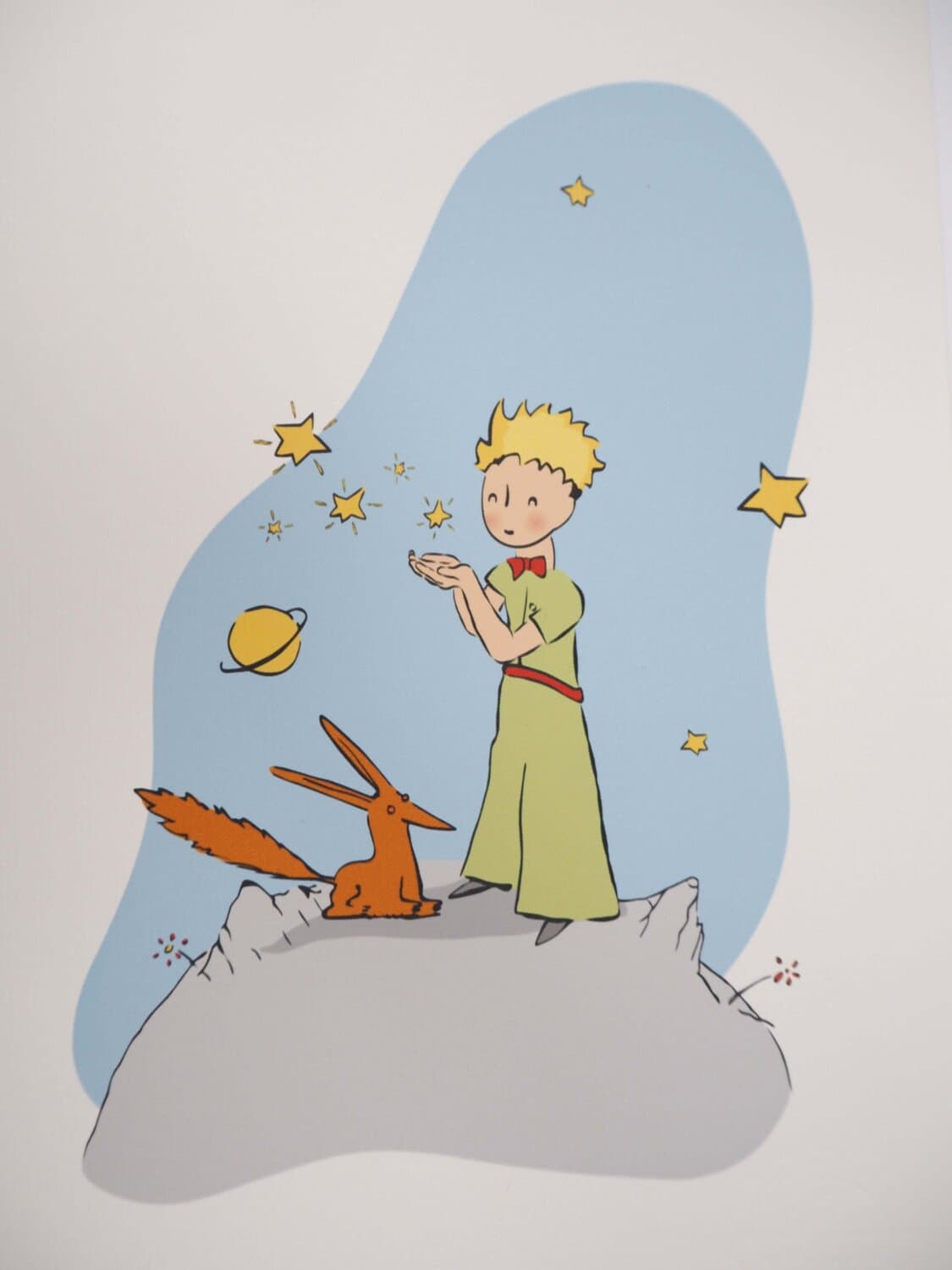
There is a scene in The Little Prince that captures this perfectly. The little prince asks the aviator to draw him a sheep. The aviator draws one. Not that one — too sickly. He draws another. Too old. Another. That one has horns. Frustrated, the aviator draws a box and tells the prince: the sheep is inside. And the prince is delighted.
This is exactly what modern psychology does with diagnosis. It draws a box. It writes Generalized Anxiety Disorder on the box. It writes Borderline Personality Disorder on another. ADHD. Major Depressive Episode. The patient comes in with something that does not fit any drawing. The clinician hands him a box and says: the sheep is inside.
And the patient is delighted — for the first time, his suffering has a name. But the sheep was never in the box. The DSM categories are clusters of symptoms that statistically appear together. That is all. They have no causal power, no explanatory depth. Descriptions wearing the costume of explanations.
And the patient walks away with the box, believing he has been understood, when in fact he has been categorized. Categorization is not understanding. It is the opposite of understanding. To categorize is to stop asking the question.
This is the sleight of hand at the heart of the pseudo-science. The DSM presents itself as a scientific object. It has volumes, committees, revisions, statistics. It looks like a textbook of pathology in the way a chemistry textbook is a textbook of pathology. But the chemistry textbook tells you why the reaction happens. The DSM tells you only that certain things tend to happen together. It is a description masquerading as an explanation, and an entire profession has organized itself around treating the description as if it were the cause.
The Suffering This Produces
The consequences of this confusion are not abstract. They are everywhere visible. Walk into any institution of mental health care today and ask the workers how things are going. You will not hear that things are fine. You will hear about burnout, breakdown, institutions in crisis, waiting lists that never shrink, patients medicated for years without improvement, clinicians who have stopped believing in what they do.
Why? Because the dominant model has eliminated the only thing that ever actually worked. It has eliminated speech. The patient no longer has the right to speak — not really. He has the right to fill out questionnaires. He has the right to be assessed on a scale. He has the right to receive a diagnosis. He has the right to a treatment plan. What he no longer has the right to do is say what is happening to him, in his own words, at length, without being interrupted by a protocol.
The clinical encounter has been replaced by an administrative procedure. And the patient leaves with a prescription instead of a question.
The medication itself is a symptom of this confusion. There is a place for medication in serious psychiatric conditions, and I am not arguing against that. But the mass prescription of antidepressants and anxiolytics to people whose lives have become unlivable for reasons that have nothing to do with brain chemistry is a scandal whose scale is hidden in plain sight. People are being chemically silenced because the institutions can no longer hear what they are saying.
And the patients themselves come to want this — not because they are weak, but because they have been taught that suffering is a malfunction to correct, that the goal is to learn to live with it. This phrase is everywhere. Patients say it. Therapists say it. What is being said beneath it is: do not touch the symptom. Build a life around it. This is the institutionalization of resignation — what happens when a profession has lost the conviction that suffering can be transformed.
Why Therapists Themselves Repeat the Same Discourse
There is a final point that has to be made, even though it will not be popular. The discourse of patients and the discourse of therapists in the dominant model is the same discourse. The same vocabulary. The same resignation. The same living with.
This is not an accident. The structure of resistance that produces the patient's symptom is the same structure that produces the therapist's theory. If a clinician has not done his own analysis — has not himself encountered, on the couch, the strangeness of his own unconscious, the way his own desire has been bridled by his own history — then he will inevitably project his own resistances onto his patients in the form of clinical theory. He will teach them what he himself needs to believe in order not to face his own questions.
The cognitive-behavioral framework, the learn to live with it prescription, the acceptance and commitment therapy, the entire architecture of contemporary psychological intervention — these are not neutral techniques. They are the systematized resistances of a profession that has refused to interrogate itself.
In psychoanalysis, the analyst's own analysis is a structural requirement. You cannot practice without having spent years on the couch yourself, encountering what your patients will come to encounter. This is not optional. It is not a credential. It is the condition of the work.
Conclusion
The accusation that psychoanalysis is a pseudo-science is upside down. Psychoanalysis is not a pseudo-science because it never claimed to be a science. It operates on the subject that science forecloses. It uses the only method appropriate to that subject: speech, listening, interpretation, and time.
The actual pseudo-science is what dominates the consultations and the institutions and the public discourse. It has all the trappings of science — statistics, protocols, evidence-based guidelines — and none of the substance, because it has chosen to operate on a domain where its methods structurally do not apply. It produces descriptions and calls them explanations. It produces categories and calls them diagnoses. It produces medication and calls it treatment. It produces resignation and calls it progress.
The cost is paid by patients, who suffer twice — once from the original symptom, and once again from the false promise that their suffering is a malfunction rather than a question.
If you have read this far and you recognize something of your own experience in what is described — the diagnosis that explained nothing, the medication that silenced something that needed to speak, the learning to live with it that felt like giving up — there is another way. The clinic of speech still exists. It is what we practice.
Léo Gayrard, clinical psychologist and Lacanian psychoanalyst
Expert Q&A
Is psychoanalysis a science?
Why is modern psychology described as pseudo-scientific?
Why does this matter for patients?
But didn't Freud want psychoanalysis to be a science?
Continue reading
Read next

Psychoanalysis
Your Therapist Is a Feminist? Pick a Real One.
Patients increasingly want their therapist to share their politics, validate their values, and agree with their worldview. This is not a preference. It is anti-therapy — and it prevents the work from happening at all.

Psychoanalysis
Forgetting What You Can't Control Is Not Therapy
"Focus on what you can control, forget the rest." Many believe this is what therapy is. It's the opposite. What psychoanalysis sets against the myth of control.

Clinical
Why Caregivers Retrain as Psychoanalysts
Doctors, special education workers, psychiatric nurses: why so many caregivers end up becoming psychoanalysts after their own analysis. The logical analysis of a movement.
New Articles
Every new article, in your inbox.
One email per publication — psychology, therapy, and human behavior, by a licensed psychologist.
No spam. Unsubscribe anytime.